If you own a business, you’ve probably heard about SEO for years. It’s become a standard part of marketing, something most businesses are told they should be doing. But with AI changing how people search for and find businesses, it’s fair to ask: is SEO still worth it?
Before answering, it helps to be clear about what we mean, because “SEO” gets used to describe a few different things. In this article, SEO means search engine optimization in the traditional sense: helping your website show up in the regular, unpaid list of results on Google. This is often called organic search.
Two related areas matter just as much but work differently, so they get their own articles: local search, meaning the map and business listings that appear for searches like “plumber near me,” and AI tools like ChatGPT. I’ll touch on AI only where it affects the regular results, because more and more, it does.
Is SEO worth it for a small business?
For most local service businesses, yes, as long as it’s done well and connected to the rest of your marketing. SEO is worth it when it helps the right people find you and you can see which searches turn into calls. It rarely pays off when it’s sold as a standalone package with no clear way to measure it.
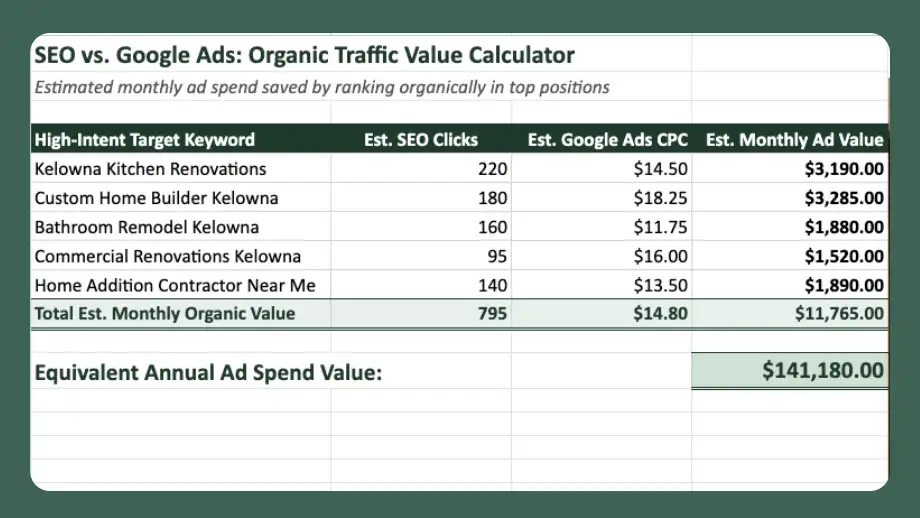
In my experience, SEO is still one of the highest-return marketing investments a business can make. With ads, you pay for every click, and the traffic stops when the budget does. A page that earns its place in the search results keeps bringing people in month after month. For any business that wants to attract customers online, SEO isn’t really optional anymore. The question is less whether to do it, and more how to do it well.
The easiest way to tell good SEO from the kind that doesn’t pay off is to understand what SEO is actually doing. Once you see how Google decides which websites to show, you can judge for yourself whether the work you’re paying for is worth it.
How does SEO actually work?
Every time someone searches, Google’s job is to show the most helpful result out of hundreds of billions of web pages. To decide, it looks mainly at three things: whether a page is relevant to what the person means, whether it shows signs of expertise and trust, and whether it’s helpful and easy to use. SEO is the work of making your website strong on all three.
Google explains how this works on its How Search Works site. Many signals are involved, and you don’t need to know them all. Most of them come back to those three questions. Google also considers context, like where the person is searching from, which is a big part of why local search works a little differently. That’s a topic for its own article.
Relevance: does your page match what the searcher means?
Google starts by working out the meaning behind a search: what the person is actually trying to get done. It uses language models to understand intent, correct spelling mistakes, and connect words that mean the same thing. Someone searching “furnace making a banging noise” and someone searching “why is my furnace so loud” are asking much the same question, and Google can tell.
Then it looks for pages that match. The words on your page still matter. Google says the most basic sign of relevance is a page using the same words people search for, especially in its headings and body text. But because Google understands meaning, it doesn’t need to see a phrase repeated over and over. It needs a page that clearly covers what the person is looking for.
This is one of the places I see a gap in the industry. A lot of SEO work is still built around fitting specific keywords onto a page, because that’s how it was taught for a long time. The businesses doing well now think in themes. They ask, “What does someone need to know before they hire us?” and build pages that answer that fully.
What is off-page SEO? It’s about authority and trust
Once Google has found the relevant pages, it tries to put the most helpful and trustworthy ones first. It looks for signs of expertise, authority, and trust, and one of the signals it names is whether other prominent websites link to or mention your content. Building those signals outside your own website is what people mean by off-page SEO.
Think of links from other reputable websites a bit like references. The more respected the source, the more the reference counts. You might hear this called domain authority, which is a score some SEO tools use to estimate how trusted a website is. Google doesn’t use that particular score, but the idea behind it holds: a site that others vouch for has an advantage.
This is the piece people are least likely to hear about, and it explains a lot. The best article ever written on a topic can still struggle on a brand-new website for an unknown business, while the same article on a well-known local company’s site ranks well. SEO builds on the trust your business has earned. It doesn’t replace it.
Usefulness: is your page helpful and easy to use?
Google says its systems aim to reward content that’s created to help people, not content written mainly to rank. It also looks at usability, such as whether a page works well on a phone and loads quickly. In Google’s words, when other signals are relatively equal, content that people find more accessible may perform better.
Picture two pages about fixing a leaking tap, both from experienced plumbers. One is packed with technical terms and hard to follow. The other has clear steps and headings anyone can follow. The second is the one people actually find helpful, and that tends to show. Expertise matters most when people can use it.
Put together, SEO is the ongoing work of making your website the most relevant, trusted, and useful answer for the searches your customers make. Notice that all three are also things that make a customer more likely to call you. That’s why good SEO and good marketing tend to point in the same direction.
What kind of SEO actually pays off?
SEO pays off when it’s guided by a strategy tied to your business goals. Every task, from choosing which searches to target to designing pages and writing content, is done with a specific customer and what they’re looking for in mind. Then the website gives that customer an easy way to get in touch.
Most SEO work starts with keyword research: finding out what people actually type into Google. It’s an important first step, and it’s where a lot of the value is decided. But a list of keywords on its own isn’t a strategy. If someone picks popular search terms without thinking about what the business actually does, it’s possible to spend a lot of money bringing people to a website who were never going to become customers. They searched for something, the site ranked for it, and that’s where it ends.
That’s why some numbers in marketing get called vanity metrics. They look impressive in a report but don’t connect to anything the business cares about. To use an extreme example: if I showed a plumber in Kelowna that their website ranked number one in North Vancouver, it would mean nothing for their business. The ranking is real. It just doesn’t bring in a single job.
SEO that pays off works the other way around. It starts with the business and its customers, then works out which searches those customers make at each stage. Someone whose furnace is making a strange noise wants to understand what’s wrong. Someone else is weighing repair against replacement. Someone whose furnace quit on a cold night is ready to call. Good SEO gives each of those people a page that helps them, and when they’re ready, a clear way to reach you. The first two build trust. The third turns into a call, and it’s often to the business that helped with the first two.
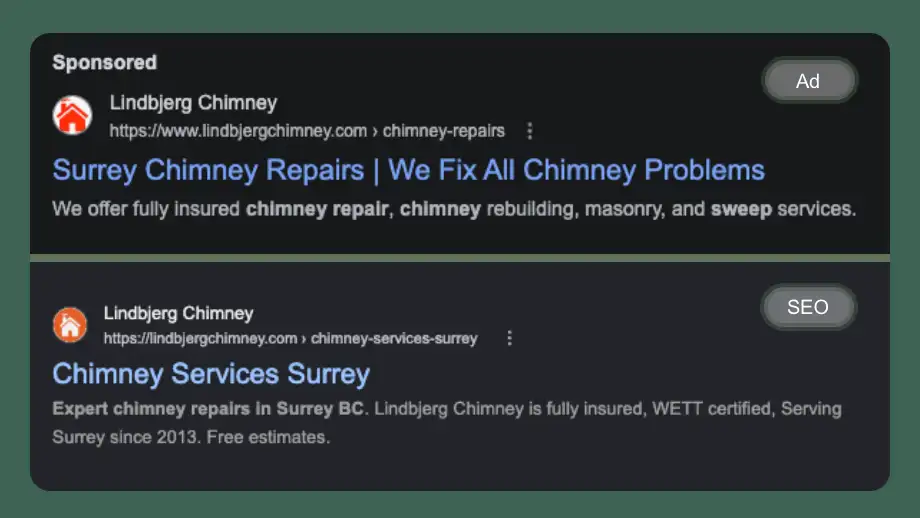
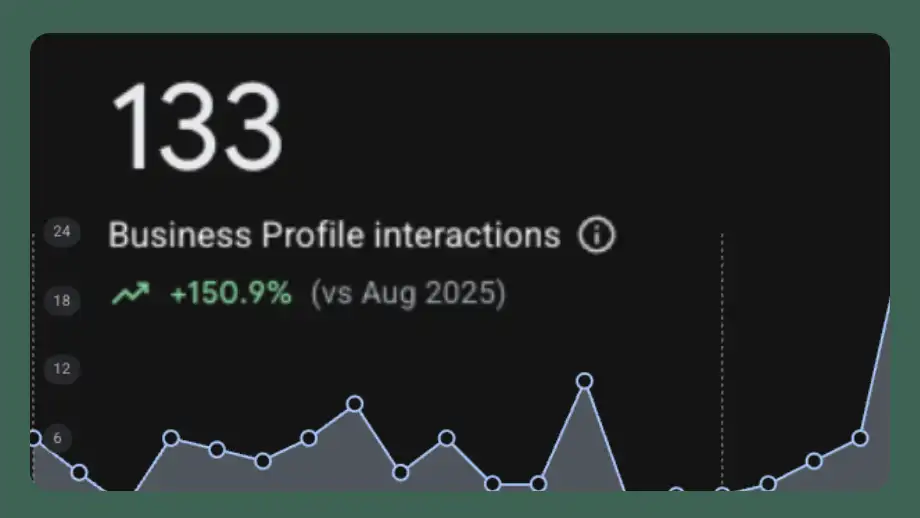
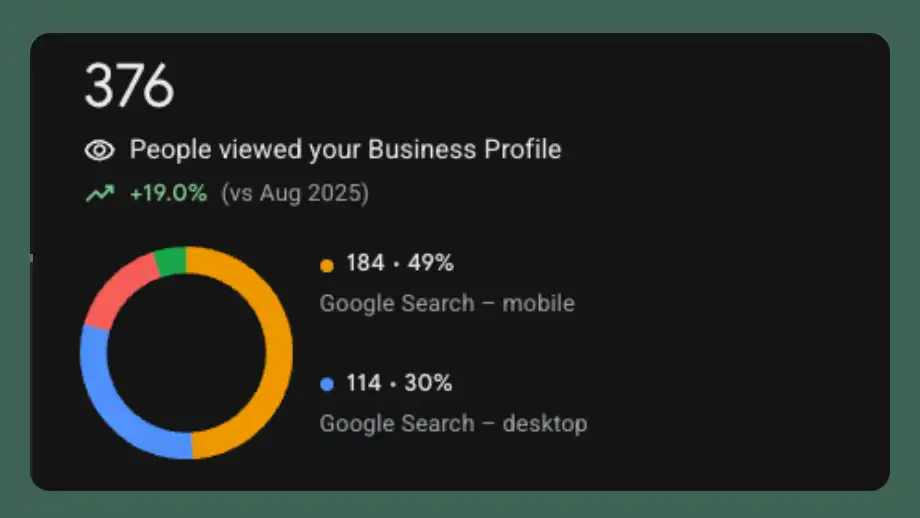
I’ve seen the difference firsthand. When Lindbjerg Chimney first came to me, the owner had signed up for an SEO program with another provider. Months and several thousand dollars later, he had nothing to show for it. Within two months of working together, with the work tied to what his business does and who it serves, his business was ranking and the phone was ringing with real leads. I don’t share that to criticize anyone. It’s a good example of the difference a strategy makes.
A local service business doesn’t need 5,000 random visitors a month. Fifty visits from people who actually have the problem you solve are worth far more.
Here’s how the two approaches compare in practice:
| Traffic first | Intent first | |
|---|---|---|
| What it targets | Broad, popular searches like “home renovation ideas” | Specific searches from people who have the problem you solve, like “why is my furnace banging” or “basement renovation cost Kelowna” |
| What it measures | Impressions and total visitors | Calls, form submissions, and booked jobs |
| What it builds | Long, general blog posts for casual readers | Helpful articles and focused service pages that answer real customer questions at each stage |
| Where visitors land | The homepage and a general contact form | A page about their exact problem, with a clear next step and fast follow-up |
You might be wondering whether this means blogs and educational content are a waste. Not at all. Most people research before they hire, and the business that helped them understand their problem is often the one they call. Google says as much in its own guidance: it aims to reward content created to help people, not content made mainly to attract search traffic. The key is that educational content is written around your actual customers’ questions, and connects to the pages that turn research into calls.
And it pays off over time, not all at once. SEO isn’t a project you finish. New competitors keep appearing, Google keeps refining how it ranks results, and the questions your customers ask keep changing. Even a business with a full schedule today benefits from staying visible, because a full pipeline doesn’t stay full on its own.
Is SEO still relevant now that AI answers questions?
Yes. In fact, Google says the best practices for SEO remain relevant for its AI features. What’s changing is where attention goes. An AI-written summary, called an AI Overview, now appears at the top of roughly half of Google searches, and the pages linked as its sources get far more of the clicks.
The numbers behind this shift are worth knowing:
- In the first four months of 2026, about 68% of Google searches in the US ended without a click to any website, according to SparkToro’s analysis of Similarweb data.
- When an AI Overview appears, the page ranked first gets 58% fewer clicks on average, according to Ahrefs.
- Brands that are cited inside the AI Overview get about 120% more organic clicks than when they aren’t cited, according to Seer Interactive.
In plain terms, ranking first isn’t what it used to be if an AI summary answers the question above you and links to someone else. Being one of the sources it links to is what gets the click. There’s an upside, too. Google says AI Overviews can link to a wider range of pages than a classic list of results, which gives more businesses a chance to be included.
So how do you become one of those sources? You may hear this called AEO (answer engine optimization) or GEO (generative engine optimization), and it’s sometimes sold as something entirely new. Google’s own answer is simpler: there are no special requirements or tricks to appear in AI Overviews. A page needs to be in Google’s index and eligible to show in the regular results, and the same fundamentals apply: relevant, trustworthy, and genuinely useful. In my experience, pages that answer real questions clearly and directly also tend to be the ones AI summaries draw from, which is one more reason to write that way. SEO isn’t going away. It’s the foundation AI search is built on.
How long does SEO take to work?
It depends on where your website is starting from and what it’s up against: whether other reputable websites already link to yours, how strong your competition is, and how much search activity there is for what you do. That’s why I don’t promise timelines or rankings before starting, and Google doesn’t either.
Google is direct about this in its own guide to hiring SEO help: “No one can guarantee a #1 ranking on Google.” It also suggests asking any SEO provider what results they expect to see, and in what timeframe. That’s a fair question. A good answer is based on your market and your competition, not a promise made before anyone has looked.
What I can say is that the first month after an optimized website goes live tells me a lot. How quickly Google starts showing the site, and for which searches, shows what we’re up against and sets realistic expectations from there.
If someone offers you a guaranteed ranking or a guaranteed date, especially in an email that arrived out of the blue, that’s worth a pause. Google’s guide advises caution with both.
How do you measure SEO performance?
The ultimate measure of SEO is growth in the calls, enquiries, and customers that come from organic search over time. Along the way, different measurements matter at different stages. Early on, rankings show how Google is seeing your site. As things build, engagement and enquiries show whether the right people are finding you and taking the next step.
Here’s what I look at, and why each one matters:
- Early on: how Google sees your site. In a new campaign, I compare rankings against where the site started and against competitors. That shows how Google is treating the site and helps plan the next moves. Google Search Console, a free tool from Google, shows which searches your site appears for and how often people click. Appearances in AI Overviews are counted in the same report.
- As it builds: whether visitors find what they came for. Tools like Google Analytics show how long people stay on a page and how many leave right away (you may hear this called bounce rate). If people find a page in search and leave quickly, the page probably isn’t giving them what they expected, and fewer of them will get in touch. That tells me which content needs work.
- Throughout: enquiries from search. Call tracking and form tracking show which calls and messages came from people who found you through organic search, rather than from referrals or ads.
- Over time: customers and sales. A simple system that records each lead and what happened to it shows which enquiries turned into work, and what SEO is actually worth to your business.
No single number tells the whole story. Each month, I look at all of these together to decide what to do next: which pages to improve, which searches to go after, and what to leave alone. But the measurement that matters most is the one you’ll notice yourself: more calls, more enquiries, and more work coming from people who found you in search, growing over time.
If your current reports show rankings and traffic but nothing about calls or jobs, that isn’t a failing on your part. It’s a gap in what’s being reported, and a fair thing to ask about.
That’s a lot of moving parts, and you don’t have to manage them yourself. I look after all of this for my clients every month as part of a Monthly Growth Plan, from strategy and content to tracking which searches turn into calls, bringing in trusted specialists where they add value. If you’d like to talk about what that could look like for your business, let’s schedule a call.