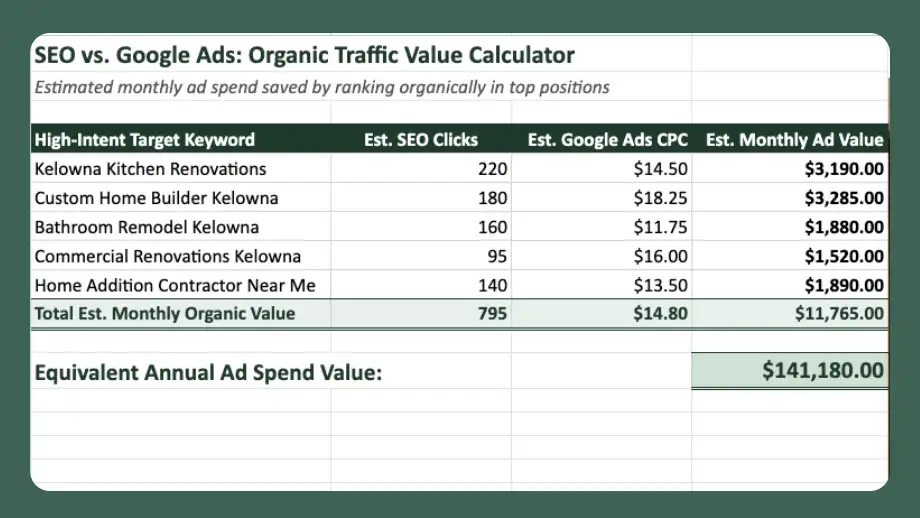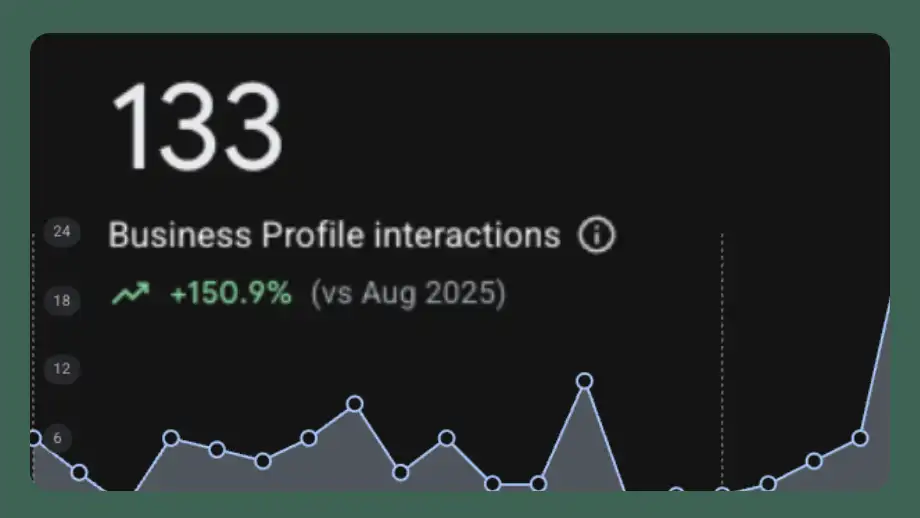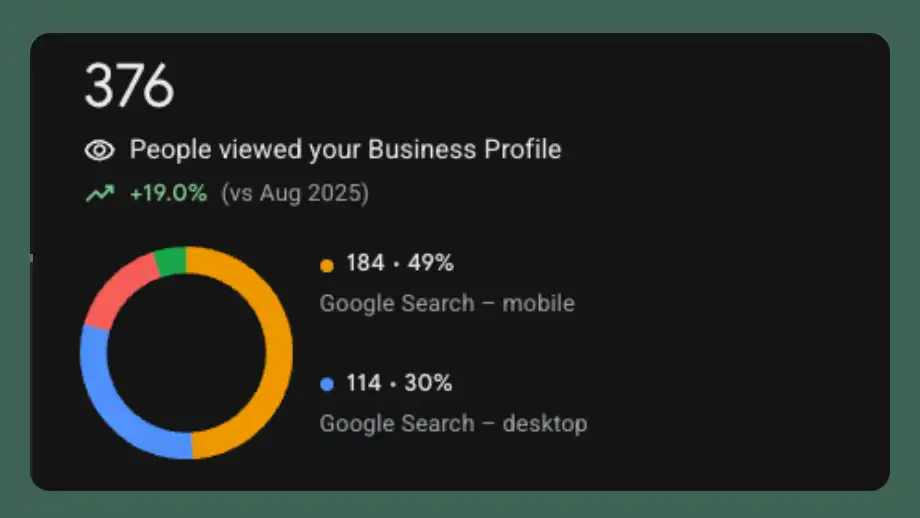
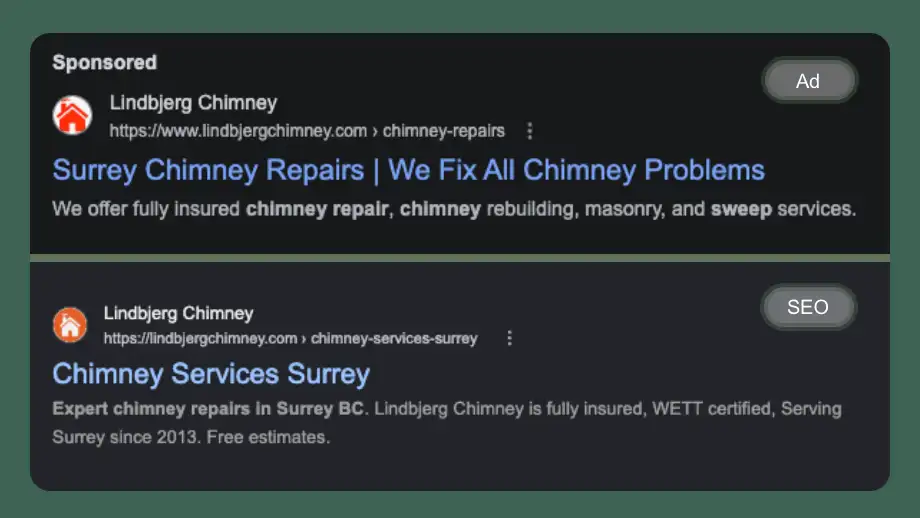
If you’ve decided it’s time to invest in marketing, one of the first questions is where to start: Google Ads or SEO? Both can bring in new customers from Google, but they work very differently, and the right first step depends less on which one is “better” and more on how soon you need new work.
Should you start with Google Ads or SEO?
It depends on how urgently you need new leads. If your pipeline is healthy and you mainly want to keep your place in search results, SEO is usually enough. If your schedule often feels close to empty, Google Ads is the faster first step. If your budget allows, doing both brings in leads now while you build for the future.
How are Google Ads and SEO different?
Google Ads puts your business in the sponsored results at the top of the page, and you pay each time someone clicks. SEO, short for search engine optimization, is the work of earning a place in the regular, unpaid results and on Google Maps. Here’s how they compare:
| Google Ads | SEO | |
|---|---|---|
| How fast it starts | Quickly. Google reviews most ads within one business day | Gradually, usually over several months |
| How you pay | Per click, plus the cost of managing the campaigns | For the ongoing work, not for each visitor |
| What happens when you stop | The ads, and the leads from them, stop | Rankings tend to fade slowly rather than disappear overnight |
| Where you show up | Sponsored results | Regular results and the map listings |
Neither one is a shortcut around the other. Ads give you speed and control, while SEO builds something that keeps working in the background. The question is which of those you need most right now.
Why is SEO worth the slower start?
SEO takes longer to build than ads, but it tends to last. The work you put into it doesn’t disappear the moment you stop paying, and much of it improves your business online in ways that go beyond your Google rankings.
- A better website for your visitors. Much of good SEO work is simply making your site clearer, faster, and more helpful: pages that explain your services well and make it easy to get in touch. That helps every visitor, however they found you.
- More places to be found. Google says the same SEO best practices apply to its AI features, like the AI-generated answers at the top of some searches. Helpful, well-organized content also gives other search engines and AI tools more to work with when someone asks about the services you offer.
- Content people want to share. A genuinely useful article or project page can be shared by customers, suppliers, or local groups. Each share puts your name in front of new people and builds your reputation over time.
When does SEO make sense as the first step?
SEO is a good fit when your business is already doing well. Some of the owners I work with aren’t looking for a flood of new customers. They want to know they’re maintaining a strong presence, holding their place in the rankings, and ideally climbing a little over time.
For them, steady SEO work is enough. It keeps the business visible to people searching for what they do, without paying for every click. Because it takes time to build, it also rewards starting before you need it. How long does local SEO take? covers what to expect.
When should Google Ads come first?
Google Ads makes more sense when the pipeline is the concern. If you’re often looking at the next few weeks wondering where the work will come from, waiting months for SEO to build isn’t much comfort.
Ads can start putting your business in front of people searching for your services almost right away. You choose the searches you want to show up for, the areas you serve, and how much you spend, and you can adjust as you learn what brings in the right kind of calls.
What about doing both?
If your budget allows, running both is often the most balanced approach. Ads bring in enquiries now, while SEO builds visibility that doesn’t depend on paying for every click. Over time, that can take some of the pressure off your ad spend.
The two also help each other. Your ad results show which searches actually turn into calls, which is useful when deciding which services and pages to focus your SEO on. If you’re weighing how much to invest, How much should a small business spend on marketing? walks through a few ways to work it out.
Whichever you start with, both send people to the same place: your website. If visitors don’t find what they need there, or it isn’t easy to get in touch, both channels will bring in fewer leads than they could.
Choosing where to start is only the first decision. Ads need regular attention to keep costs in check, and SEO needs steady work to build and hold its ground. I look after both for my clients every month as part of a Monthly Growth Plan, bringing in trusted specialists where they add value, so the two work together instead of separately. If you’d like to talk about which makes sense for your business, let’s schedule a call.