If you’re investing in local SEO, or thinking about it, one of the first questions is how long it will take before the phone starts ringing. It’s a fair question, and the honest answer is that it depends. The good news is that it depends on things you can understand, and in many cases influence.
Local SEO affects where your business shows up when someone nearby searches for what you do. That includes the map results in Google Search, often called the map pack; Google Maps itself, which many people use on their phones to find a business nearby; and the regular list of websites in Google’s search results. Your Google Business Profile mainly drives the first two, and your website mainly drives the third. They move at different speeds, and knowing why makes it much easier to set realistic expectations.
How long does local SEO take?
There’s no fixed timeline, but there is a general pattern. Your Business Profile usually responds first, and your position in the map results can improve well before your website’s service pages start to rank, which usually takes months. Service-area businesses without a public address, and businesses in competitive markets, should expect a longer road.
Google shares the principles behind its rankings but keeps the details private, largely to stop people from gaming the system. So the SEO industry relies heavily on experience and testing. In this case, the general view among SEO practitioners is that a solid map position in a competitive market takes around six to twelve months.
Where your business lands in that range depends a lot on what kind of business you are. If customers visit your location, you do good work, and people leave good reviews, local SEO can bring in calls and visits surprisingly quickly. If you’re a contractor who works at customers’ homes and doesn’t have a public address, local SEO still matters, but it’s worth pairing it with something more immediate, like Google Ads, while it builds.
What does a typical local SEO timeline look like?
Local SEO usually moves in stages. Your Business Profile responds first, then your position in the map results firms up, then your website’s service pages start to rank, and over time your reach grows into surrounding areas and more competitive searches. The stages overlap, and how long each one takes depends on your market and your competition.
The reason for the stages is fairly simple. Your Business Profile and reviews can be improved quickly, while website content and the trust that comes from other websites linking to yours build over time.
Here’s the general order SEO practitioners describe:
- First, your Business Profile. Once it’s verified, completed, and set up properly, you may start to see early impressions and movement for searches close to your location.
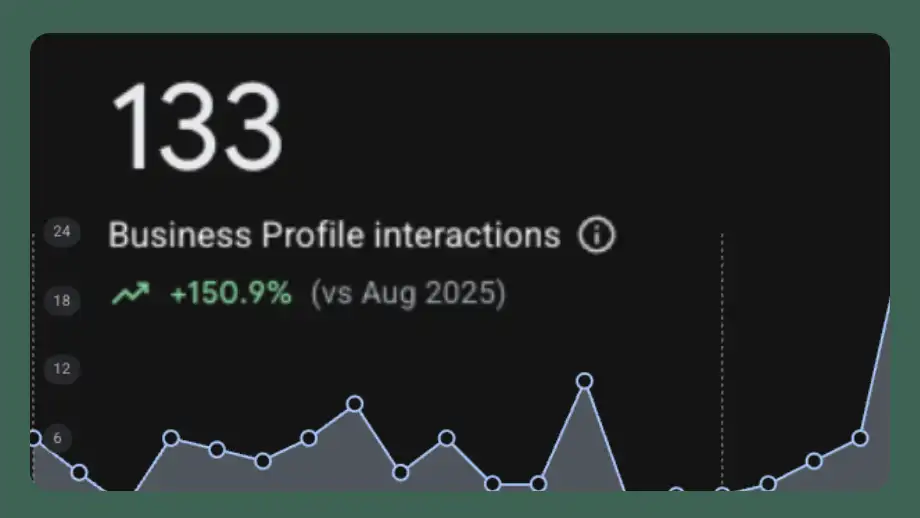
- Next, your map position. Your place in the map results firms up in your immediate area, and calls, website visits, and direction requests from your profile start to climb.
- Then, your website. Your service pages begin ranking in the regular search results for local searches, which helps steady your flow of leads.
- Over time, your reach. As your authority builds, your visibility expands into surrounding neighbourhoods and more competitive searches.
For timing, the practitioner view mentioned above, around six to twelve months for a solid map position in a competitive market, is a reasonable reference point. A business in a smaller market with little competition can move faster, and a service-area business or one in a crowded market can take longer. The next section covers what makes the difference.
What affects how fast local SEO works?
The biggest factors are how much competition you have, whether customers can visit you at a public address, the reputation your website has already built, your reviews and business information, and the technical health of your website. Google says local results are based mainly on relevance, distance, and prominence, and each of these factors feeds into one of the three.
- Competition. If only a handful of businesses in your area offer what you do, there’s less ground to cover. If you’re one of dozens of established companies competing for the same searches, it takes longer to earn a spot near the top.
- Your website’s history. An established website usually has a head start. That’s not because of its age alone, but because it’s had time to build content, earn links from other websites, and develop a reputation. A brand-new website starts from zero on all three.
- Reviews and business information. Google says the number of reviews you have and your ratings can help your local ranking. Complete, accurate business information matters too, and SEO practitioners generally agree that keeping your business name, address, and phone number consistent across online directories helps.
- Technical health. Google pays attention to whether a website works well on a phone and loads quickly. A site with technical problems has a harder time ranking in the regular results, no matter how good the content is.
What if you don’t have a storefront?
This one deserves its own note, because it affects many contractors and home service businesses. Distance is one of Google’s three main factors for local results, and it’s measured from your business location. If you work at customers’ homes and your address is hidden, Google still uses the address you verified your profile with. Testing by the local SEO firm Sterling Sky found that the service areas you list don’t change where you rank. As they put it, the only impact of the service area is visual.
In practice, that means a service-area business can show up for searches near its verified address, but listing more towns won’t stretch its map visibility much farther. I’ve seen the difference firsthand: businesses with a public local address and a well-set-up profile have shown up for nearby searches much sooner than contractors working without one. This isn’t a penalty. Local search is designed to show people businesses close to where they are. How that works for service-area businesses is a topic big enough for its own article.
What can you do while local SEO builds?
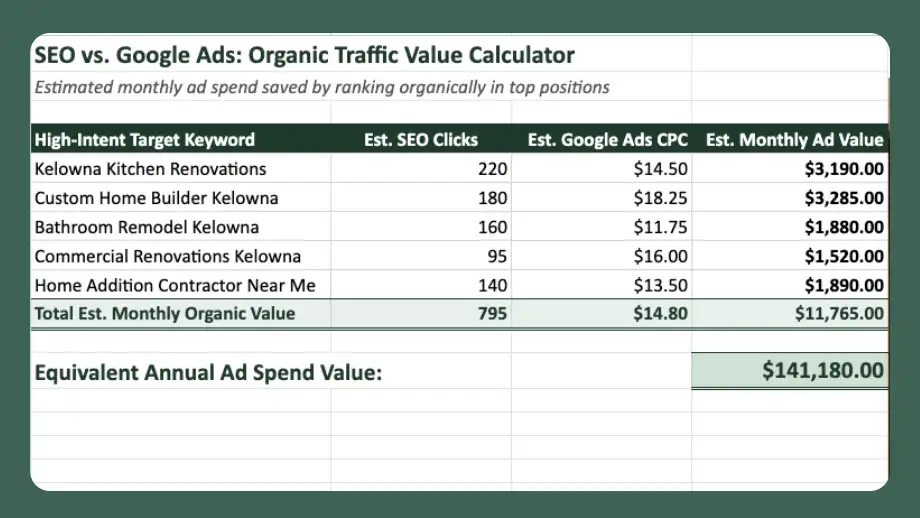
If you need leads now, run Google Ads alongside your local SEO. Ads can put you in front of people searching for your services right away, while your Business Profile and website build the visibility that keeps bringing in calls over time. It’s especially worth considering if your website is new or you’re a service-area business.
The two work well together. With ads, you pay each time someone clicks, and your visibility stops when the budget does. Local SEO takes longer to build, but once it’s working, it keeps bringing people in without paying for every visit. Ads also let you choose the areas you want to reach, which helps a service-area business show up in towns where its map listing doesn’t reach yet.
While that’s running, a few things help local SEO move along:
- Ask every happy customer for a review. Google says the number of reviews and your ratings can help your local ranking, and a steady flow of recent reviews also helps people choose you.
- Keep your Business Profile complete and accurate. Your services, hours, photos, and contact details should all be current.
- Make sure your website clearly describes what you do and where. Each main service deserves its own page that answers the questions your customers ask.
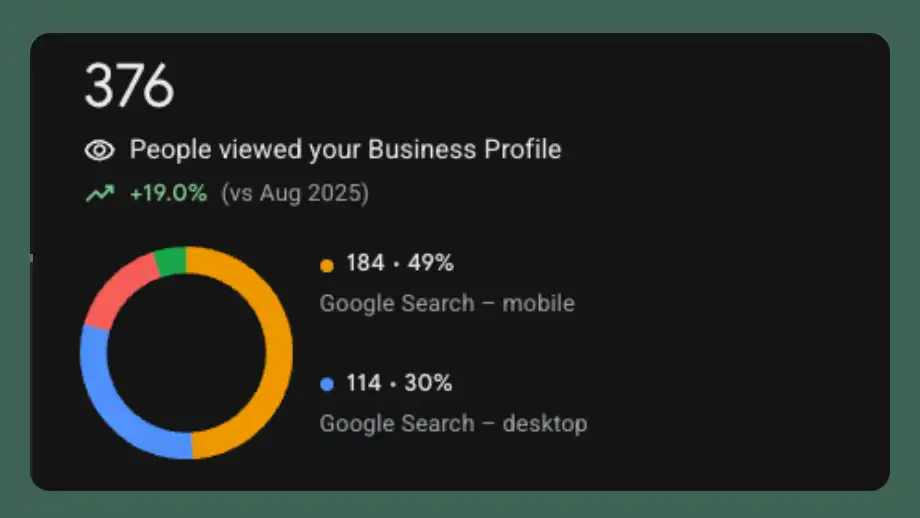
- Watch the early signs. Your Business Profile shows how many people found you, called, asked for directions, or clicked through to your website. Google Search Console shows how your website is doing in the regular results. Early movement, or the lack of it, tells you a lot about what you’re up against.
Local SEO rewards patience and steady work, and it keeps paying off long after the early months. You don’t have to keep track of it all yourself. I look after these details for my clients every month as part of a Monthly Growth Plan, including Google Ads when it makes sense, and I bring in trusted specialists where they add value. If you’d like to talk about what that could look like for your business, let’s schedule a call.